Microsoft Rebuilds Copilot: Home, Code, and Autopilot, Explained
Microsoft's September 25, 2026 announcement unifies Copilot around Home, Code, and Autopilot. Here is what each piece does and what teams should test first.
Affiliate disclosure: This article may later contain clearly labeled affiliate links. Our reporting and conclusions are not sold. Read the full policy.
The short answer
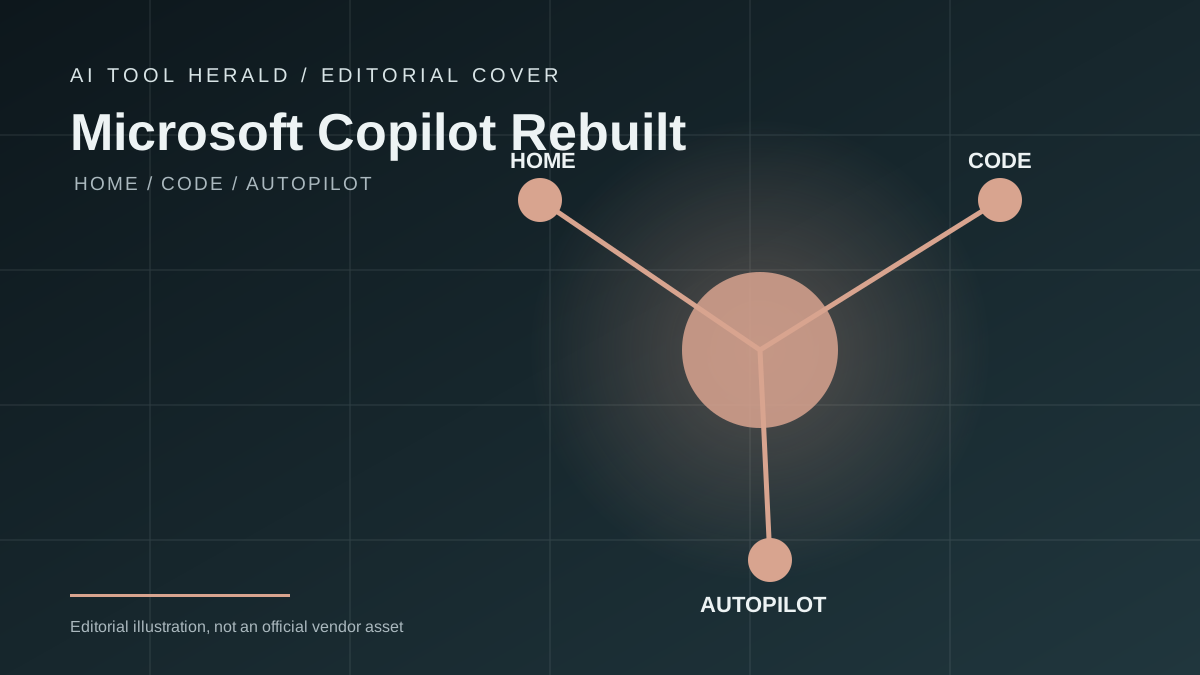
Microsoft is merging its consumer and work Copilot assistants into one app organized around three jobs. Home is the new starting point, where chat, the Cowork agent, and the Office apps live together. Code builds small working apps and automations from plain language. Autopilot is an always-on agent that keeps working after the user steps away. The company announced the change on September 25, 2026, and most of it reaches users in stages through the Frontier program.
What changed
Home brings Chat and Cowork into one place and puts Word, Excel, and PowerPoint inside the Copilot app itself, so a user can move between conversation, documents, and spreadsheets without switching windows.
Code targets people who do not write software for a living. A user describes an app, tracker, dashboard, or workflow, and Copilot builds it. Microsoft says Code runs on the same underlying technology as GitHub Copilot, executes in a sandboxed environment, and can be hosted inside the organization’s own tenant. It reaches Frontier customers at the end of September, with broader availability in the following weeks and a preview for Microsoft 365 Premium and Pro subscribers later this year.
Autopilot is the most ambitious piece. It is a persistent, proactive, personal agent hosted in the cloud that continues working when the user is not present. Microsoft frames it as a shift from asking an assistant for help to delegating a goal and checking the result. Autopilot expands to private preview at the end of September.
Underneath the three pieces sits Microsoft IQ, the company’s unified platform for enterprise context. Fabric IQ, which connects more than 20 million semantic models from Power BI, is generally available in Chat and Cowork today. Grounding in Dynamics 365 and Power Platform data enters public preview over the next month.
The commercial model changes too. Microsoft is pairing user subscriptions with usage-based billing for advanced capabilities and introducing FinOps for AI, a set of tools for tracking and governing what agents cost.
Why it matters
Microsoft is betting that the basic unit of knowledge work is no longer the file. A document, a spreadsheet, and a deck still matter, but Code adds a fourth unit: a small, purpose-built solution that exists to get one job done. If that bet lands, the people who build these solutions will be the same people who use them, and IT teams will inherit a new category of software to secure, version, and audit.
The pricing change matters as much as the features. Usage-based billing for agent work means a team can no longer assume a flat subscription covers everything. An agent that runs for hours in the background, like Autopilot, spends money while it works. FinOps for AI is Microsoft’s answer to the question most agent pilots still avoid: who pays for the agent’s time, and how do you see the bill before it arrives?
What to test first
Test Code on one real internal workflow before judging it, such as a status tracker or a data-entry form the team currently maintains by hand. Check where the solution runs, what it can reach, and how a non-developer updates it after the person who built it moves on.
For Autopilot, start with read-only or prepare-only tasks and review every action it takes. Confirm that the audit trail shows who approved what, and test what happens when the agent meets a missing source or a conflicting instruction.
Watch spend from the first pilot. Set a budget, record what an hour of agent time costs under the new billing model, and compare it with the human time it replaces. A cheap workflow that needs constant correction can cost more than the subscription it replaced.
The decision
This is a structural change, not a feature update. Microsoft is folding chat, Office, app building, and autonomous agents into one product with one bill. For organizations already on Microsoft 365, the new Copilot will arrive whether or not they ask for it, so the useful question is not whether to adopt it but which workflows deserve the new tools first. Start narrow, keep approvals human, and let the FinOps numbers argue for or against expansion.
Primary source: Microsoft official blog announcement. Last reviewed September 27, 2026.